Beauty guidance
AI beauty analysis vs virtual makeup try-on: what’s the difference?
AI beauty analysis turns a selfie into personalised beauty guidance — what to focus on next for areas like skin presentation, hair or makeup. Virtual makeup try-on overlays products on your face so you can preview a look. Analysis helps you plan; try-on helps you visualise. Neither provides medical or skin diagnosis.
By Randova · Randova Limited
Published 14 September 20262 min read
What AI beauty analysis is designed to do
Beauty analysis apps assess a selfie (and often a short questionnaire) to suggest personalised next steps. The aim is clarity: where to focus, what to try, and how to structure a short plan. For a fuller explainer, see what AI beauty analysis is.
What virtual makeup try-on is designed to do
Virtual try-on uses AR or similar techniques to place lipstick, foundation or eyeshadow on a live or still face. The aim is a preview: “how might this shade look on me?” before you buy or apply anything.
Analysis gives guidance; try-on gives a visual preview
If your question is “what should I work on?”, analysis is the better fit. If your question is “does this lipstick suit me in this lighting?”, try-on is the better fit. Many people use both over time — they solve different jobs.
Where the two approaches overlap
Both start with a face image and both can feel “AI-powered”. Both can also mislead if lighting is poor. Overlap does not mean they are interchangeable: one outputs recommendations; the other outputs a visual simulation.
Which should you use for your goal?
- Want a short plan for skin presentation, hair or makeup habits → analysis.
- Want to preview a specific product shade or look → try-on.
- Want medical advice about a skin condition → neither; see a clinician.
| Goal | AI beauty analysis | Virtual makeup try-on |
|---|---|---|
| Understand features / focus areas | Yes — structured guidance | Limited — mainly visual |
| Personalised guidance / plan | Yes | Usually no |
| Preview makeup visually | No (not the core job) | Yes |
| Plan a routine over several days | Often yes | Rarely |
| Medical or skin diagnosis | Neither | Neither |
Neither approach replaces clinical care. Choose based on the job you need done.
Where Evora fits
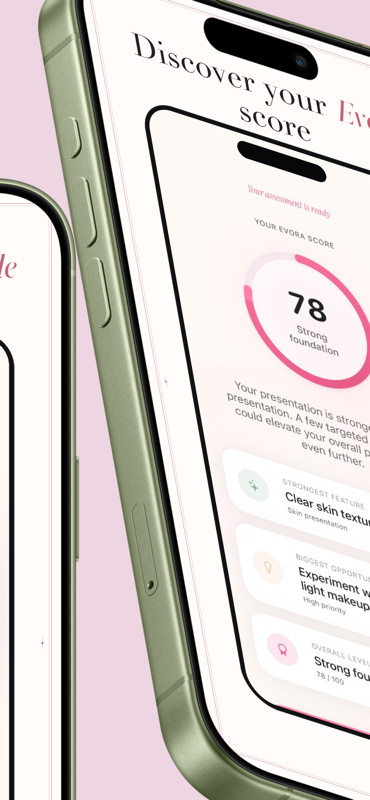
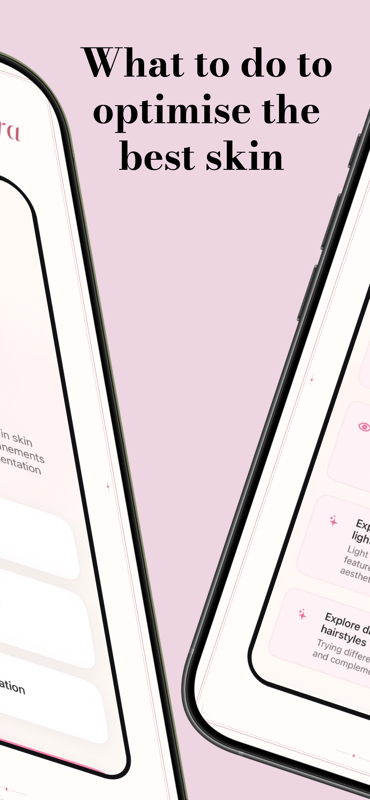
Evora is built around personalised AI beauty analysis from a selfie — including an Evora Score and a seven-day plan with guidance for skin, hair, makeup and related refinements. It is not a virtual makeup try-on product, and it is not medical or dermatological advice.