Wellbeing
What should you put in a mood tracker?
Put the smallest useful entry in your mood tracker: a mood rating, a word or two for the emotion, and optionally one short note about what happened. Add extra context only when it will help you later. Skip fields you never use — a sustainable check-in beats a perfect template.
By Randova · Randova Limited
Published 14 September 20262 min read
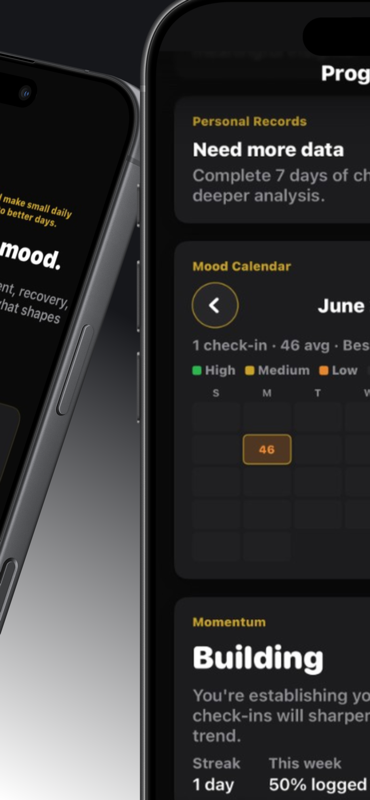
Start with the smallest useful entry
If a check-in takes too long, you will skip it. Start tiny, then add fields only when you miss them. For the habit itself — timing, scales and pattern review — see how to track your mood every day.
Your mood rating
A simple numeric or emoji-style scale is the core. Keep the same scale every day so comparisons stay meaningful. This is a self-report snapshot, not a clinical score.
The emotion or words that describe it
“3/5” and “3/5 — restless” are different. A word or two (calm, flat, wired, content) adds texture without requiring a paragraph.
One short note about what happened
Optional, but powerful: “argument before work”, “slept well”, “long walk”. Keep it to one line. You are creating retrieval cues for your future self, not writing a diary entry.
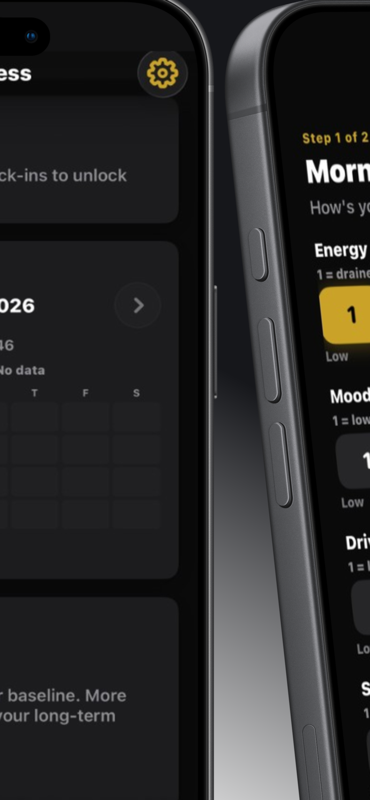
Optional context that may be useful later
- Sleep quality (rough: poor / ok / good)
- Energy or stress as a second quick scale
- Tags you actually reuse (work, social, exercise)
- Medication or cycle notes only if you personally find them useful
Optional means optional. Empty custom fields are a design smell — delete them.
What you don’t need to track
- Every meal and calorie (unless that is a separate goal)
- A full narrative of the day
- Diagnostic labels you are not qualified to assign
- Other people’s moods without their involvement
A simple daily mood-check-in template
- Mood rating (same scale every day)
- One or two emotion words
- Optional one-line note
- Optional single tag if it helps weekly review
Review the pattern, not one isolated score
Look across a week. Ask what repeats — not what one bad Tuesday “means about you”. Mood tracking supports reflection; it does not diagnose or treat mental-health conditions.
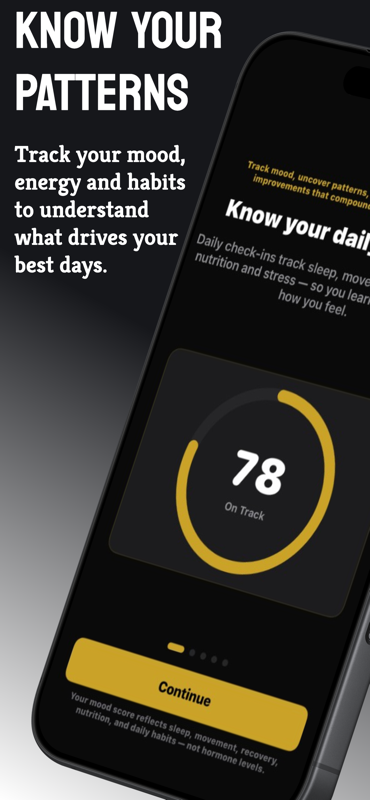
When you want the template in an app
Mood Track is designed for fast daily check-ins with Mood Scores and patterns you can revisit — for everyday wellbeing reflection, not therapy or diagnosis.
Sources & references
- NHS — Mental health — UK information and routes to professional help.